

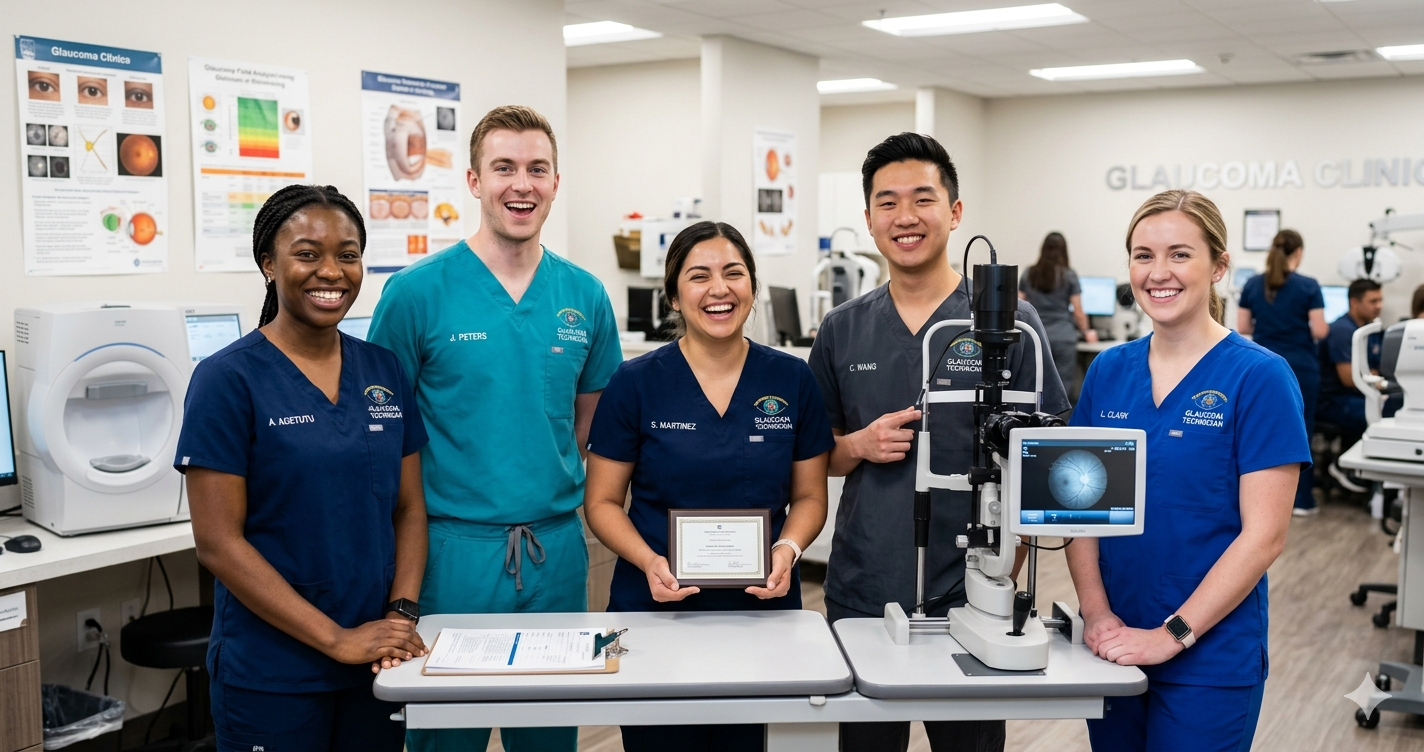
Most NHS technician roles sit firmly in the support bracket: you assist, you hand things to people and you wait to be told what to do next. This one is different. University Hospitals Coventry and Warwickshire NHS Trust is advertising for a Glaucoma Technician at Band 4, a grade that comes with something relatively rare at this level: the autonomy to run your own clinics. Independently. With full responsibility for a defined set of clinical assessments. If you have a background in ophthalmic diagnostics and you are ready to step beyond pure assisting, this is a meaningful step up.
The role is based across two sites, University Hospital Coventry and the Hospital of St Cross in Rugby, and falls within a well-regarded ophthalmology service that is actively growing. That expansion is relevant context. A department that is explicitly trying to develop and expand its technician team is one that tends to invest in the people it hires, and there is more room for professional growth inside a growing service than a static one. The salary range sits between £28,392 and £31,157 per year, and Skilled Worker visa sponsorship is available for overseas candidates who meet the requirements.
Coventry itself is worth a mention for anyone relocating. It is one of the more affordable mid-sized cities in the Midlands, has strong transport links to Birmingham and London, and has a notably young, international population, partly driven by its universities. For candidates arriving from abroad, it is a more practical landing point than many NHS locations of equivalent clinical standing.
Job Overview
| Field | Details |
| Job Title | Glaucoma Technician |
| Employer | University Hospitals Coventry and Warwickshire NHS Trust |
| Location | Coventry and Rugby, Warwickshire |
| Salary | £28,392 – £31,157 per year |
| Contract Type | Full-time |
| Hours | Not specified |
| Visa Sponsorship Status | Skilled Worker sponsorship available |
| Closing Date | 19 May 2026 |
| Interview Date | Not specified |
What You’d Actually Be Doing
- Performing a core set of ophthalmic investigations. Your day-to-day includes visual acuity testing, visual field assessment, corneal pachymetry and OCT imaging of the anterior segment and optic disc. These are the diagnostic building blocks of glaucoma monitoring, and you will be carrying them out repeatedly across a busy clinic environment.
- Running your own technician-led clinics. This is the standout element of the role. You will have the authority to lead clinics independently, taking patients through their full battery of tests without a clinician present at every step. That is a level of professional responsibility more commonly associated with higher bandings.
- Supporting and supervising other technicians. As a Band 4 post, you are expected to act as a team leader for other ophthalmic technicians working within the glaucoma service. This means mentoring, guiding and occasionally stepping in to ensure quality across the team, not just your own caseload.
- Measuring intraocular pressure. Alongside the imaging and field tests, IOP measurement sits at the centre of glaucoma monitoring. You will be doing this frequently, and accuracy matters because the data feeds directly into clinical decision-making about treatment.
- Interacting with patients in a clinical and pastoral capacity. Glaucoma is a long-term, progressive condition. Many of the patients you see will be anxious and returning for repeat assessments over months or years. Being able to reassure them, explain what is happening and maintain professionalism under the pressure of a busy clinic is as important as technical accuracy.
- Cross-site working between Coventry and Rugby. The role covers both hospital sites, so you should expect to travel between them as part of a normal working pattern. The listing does not specify how frequently, but applicants should plan for this as a regular rather than occasional requirement.
Who They’re Looking For
The listing for this role does not include a formal person specification with separate essential and desirable categories, so the following is drawn from the job summary and the overall requirements described in the posting.
Must-haves:
- Experience performing ophthalmic investigations, specifically those relevant to glaucoma monitoring (visual acuity, visual fields, pachymetry, OCT imaging, intraocular pressure measurement)
- The ability to work independently and lead patient-facing clinics without direct clinical supervision
- Strong interpersonal skills and the ability to communicate with patients in a reassuring, professional manner
- Willingness and ability to work across multiple sites
- A clear DBS check (this post requires a Disclosure and Barring Service submission)
Nice-to-haves:
- Previous experience in a dedicated glaucoma service or ophthalmology department
- Experience supervising or mentoring other clinical or technical staff
- Familiarity with the specific equipment used in glaucoma monitoring, including OCT platforms and automated perimetry
If your background is in ophthalmic diagnostics but you have not yet worked in a glaucoma-specific service, the transferable skills are strong enough to make an application worthwhile. The key is being honest about your experience with each test type and demonstrating that you can work with a degree of clinical independence.
What Most Applicants Get Wrong
- Listing their ophthalmic experience without specifying which investigations they can perform. Ophthalmology is a broad field and the equipment and skills vary considerably between subspecialties. A recruiter looking for someone who can independently perform OCT optic disc imaging and Goldmann-style IOP measurement needs to see those exact skills named. Vague references to “clinical support” or “patient care in an eye unit” are not enough.
- Underselling the clinical autonomy they already have. Many technicians working in busy NHS departments are already running parts of a clinic independently, they just have not framed it that way. If you routinely perform a sequence of investigations and document findings without someone supervising every step, that is autonomous clinical practice. Calling it “assisting” on an application for a role that prizes independence is selling yourself short in exactly the category the employer is prioritising.
- Arriving at interview without prepared examples of patient communication in difficult situations. Because this role involves managing anxious patients in a high-volume, long-term monitoring service, interviewers will probe your interpersonal skills as rigorously as your technical ones. Candidates who focus all their preparation on the clinical side and gloss over the communication competency often come unstuck at the final stage.
How to Apply (and Actually Get Noticed)
- Go to the official application page via Trac Jobs (linked at the bottom of this post). You will need to register or sign in before completing the application form.
- Read the job summary carefully and make a list of every skill and responsibility mentioned. Use this list as a checklist when you draft your supporting statement. If a responsibility is named in the listing, your application should acknowledge your experience with it, or honestly address any gaps.
- Structure your CV and supporting statement around the specific investigations named in the post: visual acuity, visual fields, pachymetry, OCT imaging and IOP measurement. If you can do all of these, name them clearly and say so in plain terms.
- Highlight any experience running clinics independently or supervising colleagues. Even if it was informal, the ability to describe it clearly and specifically will set you apart from candidates at the same technical level who lack that leadership dimension.
- Be ready to address the cross-site working requirement. If you have worked across multiple locations before, mention it. If you have not, be explicit that you are comfortable doing so and explain why.
- If you are applying from overseas and require sponsorship, complete the sponsorship section of the application form accurately. The Trust explicitly welcomes these applications and processes them through its established NHS sponsorship framework.
- Apply before 19 May 2026. Do not leave it until the final day. NHS application platforms are occasionally slow under load, and a technical failure the evening before a deadline is not grounds for a late submission.
Visa and Eligibility
University Hospitals Coventry and Warwickshire NHS Trust is an approved Skilled Worker visa sponsor. The listing makes clear that applications from overseas candidates currently requiring sponsorship are welcome and will be assessed on the same basis as all other applicants.
The salary range for this role, £28,392 to £31,157 per year, sits within the NHS Band 4 pay scale and meets the general threshold requirements for the Skilled Worker route, though applicants should verify current salary minimums on the UK Visas and Immigration website before applying, as these thresholds are subject to change.
Overseas applicants should be aware that a criminal record certificate is required from any country in which you have lived for 12 or more months (consecutive or cumulative) in the past 10 years. This applies to adult dependants as well. Full guidance is available through the UK government’s overseas criminal records checks page.
Frequently Asked Questions
Here are answers to the most common questions people ask about this Glaucoma Technician role at University Hospitals Coventry and Warwickshire NHS Trust, including eligibility, interview format, visa requirements and what to expect from the application process.
What qualifications do I need to become a Glaucoma Technician in the NHS?
There is no single mandatory qualification for this role, but relevant ophthalmic training and demonstrable experience performing glaucoma-related investigations are essential. Qualifications such as a Diploma in Orthoptics, an ophthalmic science degree, or completion of the College of Optometrists’ accredited technician training are all relevant. What matters most is practical, documented experience with the specific tests this role requires, including OCT imaging, visual field testing and IOP measurement.
Is Skilled Worker visa sponsorship genuinely available for this Glaucoma Technician post?
Yes. University Hospitals Coventry and Warwickshire NHS Trust explicitly states that applicants who require Skilled Worker sponsorship are welcome and considered alongside all other applicants. UHCW is a large NHS Trust with an established sponsorship process, so this is not a nominal or aspirational statement.
What does a typical day look like for a Glaucoma Technician at UHCW?
A typical day involves working through a list of glaucoma patients, performing a structured sequence of investigations for each person. In technician-led clinics, you manage that sequence independently. In mixed clinics, you work alongside medical staff. The pace is high in NHS ophthalmology, and patient volumes can be significant, so the ability to work accurately and efficiently is important. Cross-site days between Coventry and Rugby will also feature in the working week.
What does Band 4 mean in the NHS pay structure?
Band 4 is the fourth tier of the NHS Agenda for Change pay scale and sits above Band 3 healthcare support roles but below Band 5, which is the entry point for most registered clinical professionals. Band 4 posts typically carry additional responsibility relative to Band 3, including some clinical autonomy and a supervisory function, which is reflected in this role’s requirement to lead technician-led clinics and guide other technicians in the team.
Will I be expected to supervise other staff in this role?
Yes. The job summary states that the postholder will act as a team leader, providing guidance and supervision to other ophthalmic technicians supporting the glaucoma service. This is a formal expectation of the role rather than an informal arrangement, and it should feature in both your application and your interview preparation.
How competitive is this type of NHS technician role for international applicants?
Glaucoma technician roles are relatively specialist and attract a smaller applicant pool than general clinical support posts. This is broadly positive for international applicants. The explicit offer of visa sponsorship further signals that the Trust is actively trying to attract candidates with the right skills, regardless of where they are currently based. Strong technical experience with the specific investigations named in the post will be the decisive factor.
Does this role involve working with children or vulnerable adults?
The listing does not specify whether the patient group includes children, but ophthalmology services typically see patients across a wide age range, including older adults who may be vulnerable. An enhanced DBS check is required for this post, which is standard for NHS roles involving patient contact.
What is the Hospital of St Cross in Rugby, and what is it like to work there?
The Hospital of St Cross is a community hospital in Rugby, Warwickshire, operated by UHCW NHS Trust. It is a smaller site than University Hospital Coventry but runs a range of outpatient services including ophthalmology. Working across both sites gives you exposure to different clinical environments and patient demographics, and is generally regarded as a positive career development feature rather than an inconvenience.
How do I prepare for an interview for a glaucoma technician post in the NHS?
Prepare for a mix of technical questions about the investigations you perform and competency-based questions about how you handle patients, manage a busy clinic and work as part of a team. Be ready to describe specific examples of situations where you worked independently, dealt with an anxious patient or resolved a problem in a clinical environment. Values-based questions aligned to the NHS Constitution are also common at this level.
Official Application Link
To apply, visit the official application page for the Glaucoma Technician position at University Hospitals Coventry and Warwickshire NHS Trust on Trac Jobs.