
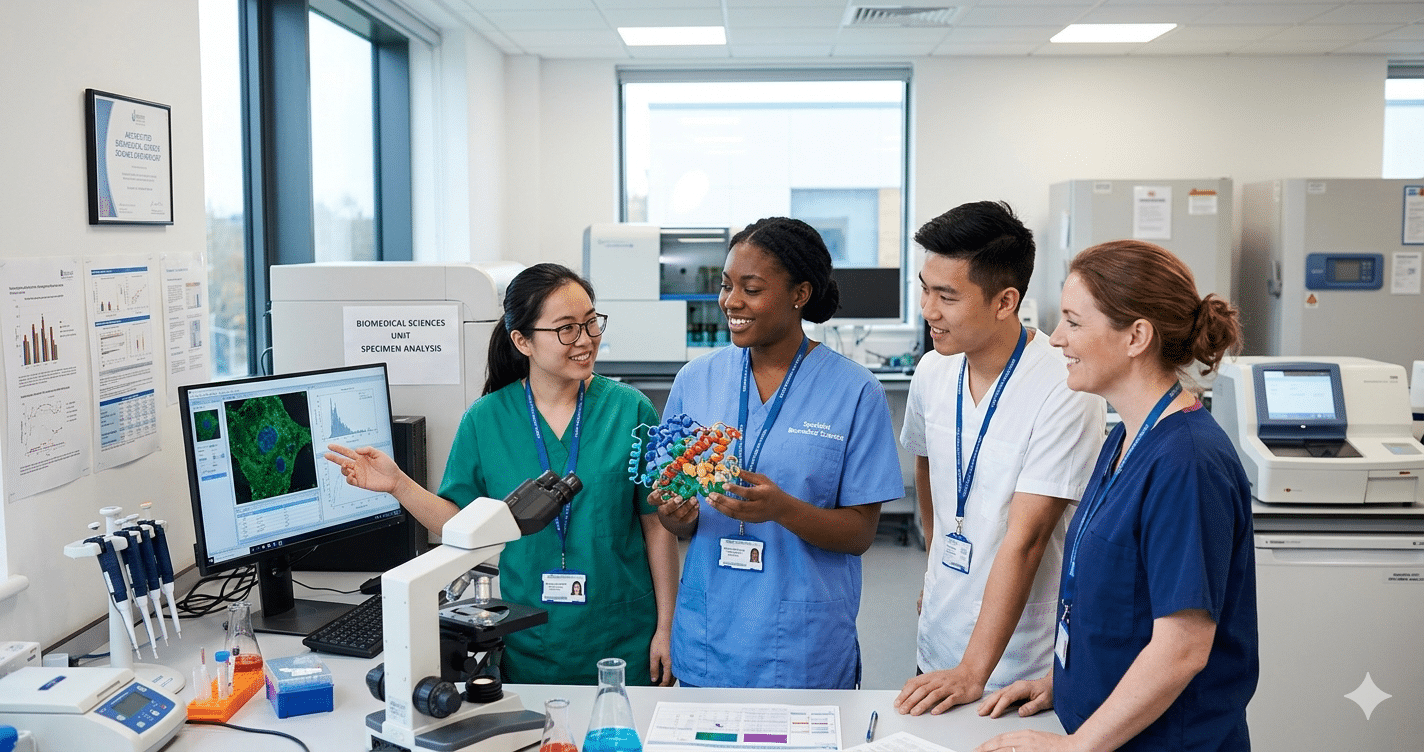
If you hold a biomedical science degree, HCPC registration, and experience in a pathology setting, this opening at one of the most recognised children’s hospitals in the world is worth stopping for. Great Ormond Street Hospital sits at the intersection of clinical excellence and groundbreaking paediatric research, and a role in its Chemical Pathology department puts you at the centre of some of the most complex diagnostic work happening anywhere in the UK. The salary sits comfortably within the NHS Band 7 range, topping out at £56,863, and the employer is willing to sponsor international applicants for a Skilled Worker visa.
What makes this particular post stand out is the scale of the operation. The Newborn Screening service here processes over 120,000 samples a year, making it the largest of its kind in the country. This is not a quiet district hospital lab. It is a high-volume, high-stakes environment with strong ties to the National Hospital for Neurology and Neurosurgery and an active involvement in both domestic and international research projects. For a scientist who wants their day-to-day work to connect to something bigger, the clinical and academic reach here is genuinely significant.
The closing date is 29 April 2026, which means there is very little time to waste.
Job Overview
| Field | Detail |
| Job Title | Specialist Biomedical Scientist |
| Employer | Great Ormond Street Hospital for Children NHS Foundation Trust |
| Location | London, United Kingdom |
| Salary | £47,951 to £56,863 per year |
| Contract Type | Full-time, permanent |
| Hours | Not specified |
| Visa Sponsorship Status | Available (Skilled Worker route) |
| Closing Date | 29 April 2026 |
| Interview Date | Not specified |
What You’d Actually Be Doing
- Working within the Newborn Screening Team: The Chemical Pathology department runs the UK’s largest newborn screening service, which means your work directly affects the early detection of life-altering conditions in newborns across the country.
- Contributing to diagnosis and management of rare inherited metabolic diseases: The lab handles a complex caseload of conditions that most pathology labs rarely see, giving you consistent exposure to rare IMDs that would be exceptional in any other setting.
- Participating in Saturday result reviews: The lab runs IMD result reviews on Saturdays on a rota basis. This is included in the role and is worth factoring into your lifestyle planning before you apply.
- Maintaining quality standards to ISO 15189 accreditation: You will be expected to support the lab’s quality management systems and demonstrate familiarity with accreditation requirements, not just be aware of them in theory.
- Handling and analysing complex data sets: Computer literacy and data analysis are listed as essential, reflecting how much of modern lab work involves interpreting outputs from automated systems rather than just running tests manually.
- Engaging with research and development activity: The department has active research links both domestically and overseas, and there are real opportunities to be involved in projects beyond your core clinical workload.
- Attending internal seminars and external professional development: GOSH provides financial assistance for external courses. Continued professional development is actively encouraged, not just listed as a perk and forgotten.
- Collaborating with clinical teams across multiple specialties: You will work alongside Metabolic, Endocrine, Neurology, Gastroenterology and Transplant teams, which means your communication and interpersonal skills get used constantly.
Who They’re Looking For
Must-haves:
- BSc in Biomedical Science or a related laboratory science degree
- Current HCPC state registration as a Biomedical Scientist
- Training or assessment completed in a Chemical Pathology or Molecular Pathology laboratory
- Evidence of continuing professional development
- Experience working in a pathology laboratory environment
- Knowledge of newborn screening processes and procedures
- Familiarity with quality management systems and ISO 15189 accreditation standards
- Experience in data handling and the ability to analyse results to support decisions
- Understanding of health and safety legislation relevant to laboratory settings
- Strong communication skills, both written and verbal
- Ability to work independently and manage your own workload
Nice-to-haves:
- Competence in basic laboratory techniques including centrifugation and qPCR
- Experience with data evaluation and formal reporting
If you meet the essential criteria but do not tick every desirable box, it is still worth applying. Desirable criteria are used to differentiate between candidates who are otherwise closely matched, not to disqualify applicants who are genuinely qualified for the role.
What Most Applicants Get Wrong
- Submitting a generic NHS CV that does not reflect the specialist nature of this role. The Chemical Pathology department at GOSH is not a general lab, and a CV that lists broad pathology experience without referencing your specific exposure to newborn screening, IMD workflows or quality management systems will not stand out. Every section of your CV should speak directly to what this department does.
- Underselling the quality and accreditation side of their experience. The listing specifically calls out ISO 15189 knowledge as essential, but many applicants treat it as background detail. If you have worked in an accredited laboratory, your application needs to show exactly how you contributed to maintaining or improving that accreditation, not just mention it in passing.
- Arriving at interview unprepared for values-based questions. The person specification lists “Combined Values” as an essential criterion, which is NHS shorthand for the organisation’s behavioural framework. GOSH is a high-profile children’s hospital with a strong culture around compassionate care and teamwork. Interviewers will probe how you work under pressure, how you communicate with clinical colleagues, and how you handle errors. Candidates who only prepare the technical side of their interview regularly come unstuck on this.
How to Apply (and Actually Get Noticed)
- Read the full person specification before you do anything else. The listing on jobvisa.co.uk is a summary. The full job description and person specification are available through the TRAC application portal. Download them and cross-reference every point against your own background before writing a single word of your application.
- Visit the official application portal at apps.trac.jobs. This is where GOSH manages all NHS recruitment. You will need to create an account if you do not already have one.
- Complete the application form in full. The NHS application form has an “Additional Information” or supporting statement section. This is not optional padding. It is the main place where you demonstrate how you meet each point on the person specification. Many shortlisting panels score this section before they even look at your CV.
- Write your supporting statement with the person specification open in front of you. Work through each essential criterion and give a specific, evidenced example for each one. Do not write a general paragraph about your enthusiasm for biomedical science. Give examples.
- Specifically address the newborn screening and IMD experience requirements. Even if your exposure is limited, mention it and explain what you know. Candidates who say nothing about these areas are easy to set aside at the shortlisting stage.
- Get your references in order before you apply. GOSH will require references from recent employers. Make sure your referees are aware of the application and know what the role involves so their references are relevant and timely.
- Submit before 29 April 2026. Do not wait until the final day. NHS application portals can slow down significantly as deadlines approach, and a technical issue the evening before closing is nobody’s responsibility but your own.
- If you are applying from abroad, ensure your HCPC registration is current and your certificate of sponsorship process is understood. The hospital will handle the certificate of sponsorship once an offer is made, but you need to be clear on your own eligibility and timeline before applying.
Visa and Eligibility
Great Ormond Street Hospital has explicitly stated that applications from candidates requiring Skilled Worker sponsorship are welcome and will be considered alongside all other applicants. This is a meaningful signal. Not every NHS trust is genuinely open to international applicants, but GOSH has ticked the box and means it.
To be eligible for the Skilled Worker visa route, your role needs to meet the salary threshold, which this one does comfortably. You will also need to demonstrate that your HCPC registration is in place, as it is listed as an essential requirement and visa sponsorship is tied to your ability to actually do the job on arrival.
If you have lived continuously or cumulatively in any country for 12 months or more in the past 10 years, you will need to obtain a criminal record certificate from that country before your visa application can proceed. This requirement applies to adult dependants over 18 as well. It takes longer than most people expect, so start early.
Full guidance on the Skilled Worker visa is available on the UK Visas and Immigration website at gov.uk/government/organisations/uk-visas-and-immigration.
Frequently Asked Questions
Here are answers to the most common questions people ask about this Specialist Biomedical Scientist role at Great Ormond Street Hospital, including eligibility, interview format, visa requirements and what to expect from the application process.
Does Great Ormond Street Hospital offer visa sponsorship for biomedical scientist roles?
Yes, GOSH has confirmed that applications from candidates who require Skilled Worker sponsorship are welcome and will be assessed on the same basis as all other applicants. The salary range of £47,951 to £56,863 meets the financial threshold required for this visa route.
What HCPC registration do I need to apply for this role?
You must hold current state registration with the Health and Care Professions Council as a Biomedical Scientist. Your training or assessment must have been completed in a Chemical Pathology or Molecular Pathology laboratory specifically, not just any pathology discipline.
Is experience in newborn screening essential for this position?
Yes, knowledge of newborn screening is listed as an essential requirement. The department runs the UK’s largest newborn screening service, processing over 120,000 samples annually, so this is a genuine operational need rather than a formality.
What is the salary band for this NHS Biomedical Scientist post?
The salary for this post ranges from £47,951 to £56,863 per year. This sits within NHS Band 7, which reflects the specialist and autonomous nature of the role.
Will I need to work weekends in this job?
Yes. The listing states that the laboratory conducts Saturday result reviews for inherited metabolic disease conditions and that you will be expected to participate in this activity. How frequently this falls to you individually will depend on the team rota.
What does the NHS application process look like for this role?
Applications are submitted through the TRAC recruitment portal at apps.trac.jobs. The process involves completing an online application form including a supporting statement, after which shortlisted candidates are contacted for interview. The interview format for NHS Band 7 posts typically includes values-based and competency questions alongside technical discussion.
Can I apply if I trained as a biomedical scientist outside the UK?
Yes, provided you hold or are able to obtain HCPC registration. Overseas-trained scientists who are already HCPC registered are eligible. If you are in the process of applying for registration, confirm your status before applying, as registration is listed as an essential requirement.
How does the Disclosure and Barring Service check work for this role?
This post requires a DBS check because of the nature of the environment, which involves working within a children’s hospital. You will not arrange this yourself. The employer initiates the check once a conditional offer has been made. If you have lived abroad, you will also need overseas criminal record certificates for any country where you have resided for 12 months or more in the past decade.
What professional development support does GOSH offer for this role?
The listing mentions financial assistance to attend external courses and regular internal seminars. Further professional development and membership of relevant professional bodies is actively encouraged. For scientists aiming towards Fellowship of the Institute of Biomedical Science or a similar qualification, this environment provides both the support and the caseload complexity to make that progression realistic.
Official Application Link
You can apply directly for this role through the TRAC recruitment portal. Visit the official application page for the Specialist Biomedical Scientist position at Great Ormond Street Hospital for Children NHS Foundation Trust to submit your application before the 29 April 2026 closing date.