

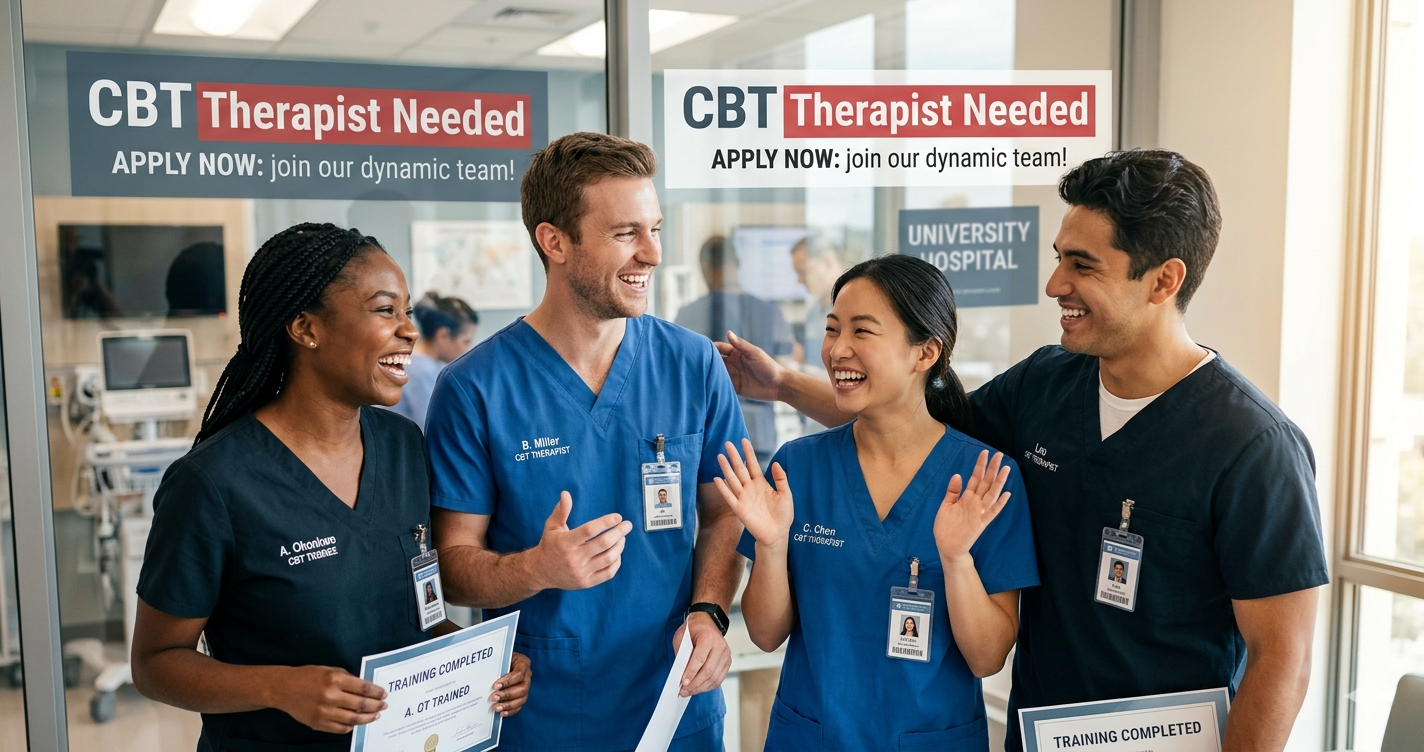
If you hold full BABCP accreditation and have been wondering whether a sponsored NHS role is a realistic option, this one is worth a serious look. Norfolk & Suffolk NHS Foundation Trust is recruiting at Band 7, which sits at the higher end of what primary care psychological therapy posts typically offer, with a salary range of £49,387 to £56,515 per year. Visa sponsorship is explicitly available, which immediately sets this apart from the majority of therapy vacancies that quietly exclude international applicants.
The role sits within the Wellbeing Service, part of England’s national Improving Access to Psychological Therapies programme. IAPT services are well-resourced by NHS standards, and the Suffolk arm has been actively expanding to take on Long Term Conditions work alongside its core anxiety and depression caseload. That means this is not a static post. There is genuine scope to develop specialist skills, and the trust commits to providing additional training in LTC working as part of the role.
What also makes this opportunity stand out is the hybrid working arrangement. The service delivers treatment both remotely and face to face across the county, so you will not be office-bound five days a week. Base locations are Ipswich or Bury St Edmunds, allocated based on where you live, which is a practical touch that not every employer gets right.
Job Overview
| Field | Details |
| Job Title | CBT Therapist (Band 7) |
| Employer | Norfolk & Suffolk NHS Foundation Trust |
| Location | Ipswich or Bury St Edmunds, Suffolk (hybrid, county-wide working) |
| Salary | £49,387 – £56,515 per year |
| Contract Type | Full-Time, Permanent |
| Hours | Not specified |
| Visa Sponsorship Status | Skilled Worker sponsorship available |
| Closing Date | 11 May 2026 |
| Interview Date | Not specified |
What You’d Actually Be Doing
- Delivering high-intensity CBT: You will carry a caseload of adults aged 16 and over presenting with anxiety disorders, depression and trauma-related difficulties, providing NICE-compliant Step 3 treatments. Expect a clinically varied caseload rather than a narrow diagnostic focus.
- Working across delivery formats: Sessions are a mix of face-to-face in clinical spaces around Suffolk and remote appointments from home. This is a genuine hybrid role with set in-person days built into your schedule, not an ad-hoc arrangement.
- Co-facilitating group interventions: Where appropriate, you will run or co-run group-based treatments. The trust provides training and additional support for group work if it is not already part of your experience.
- Receiving and engaging with regular supervision: Supervision is built into the structure rather than being optional. You will also have access to in-service CPD days and ongoing learning opportunities as a Band 7 clinician.
- Contributing to service development and evaluation: At Band 7 you are expected to take an active role in how the service evolves. This could involve contributing to quality improvement work, audit or the ongoing expansion into Long Term Conditions provision.
- Working within a multidisciplinary framework: You will be part of a broader team of psychological therapists. The service works in close collaboration with community-based and physical health colleagues, so MDT working is a genuine day-to-day reality here, not just a line in a job description.
- Receiving specialist LTC training: The trust will provide additional training to support work with people living with Long Term Conditions. This is being offered proactively, which is a meaningful commitment from a continuing professional development perspective.
Who They’re Looking For
Must-haves (essential criteria):
- Full BABCP accreditation as a CBT therapist, whether through post-qualifying accreditation or following completion of a recognised High Intensity Therapist training programme
- A professional qualification and active registration in a recognised mental health profession (for example nursing, social work, occupational therapy or psychology)
- Relevant first qualification at degree or postgraduate level in a mental health or allied health field
- Theoretical grounding in CBT and the ability to select and apply appropriate models depending on the clinical presentation
- Strong communication skills across a range of settings, including both clinical environments and conversations with colleagues in other roles
Nice-to-haves (desirable criteria):
- Experience working with a wide range of presentations, including those involving high levels of emotional complexity or distress, whilst maintaining professional boundaries and composure
If you meet the essential criteria above, do not let the desirable list put you off. Employers list desirable criteria to differentiate between candidates at the shortlisting stage, not to disqualify those who are otherwise well-qualified. If your BABCP accreditation is solid and your registration is current, you are in the running.
What Most Applicants Get Wrong
- Assuming accreditation alone is enough to carry the application. BABCP accreditation is the entry ticket, not the differentiator. What the shortlisting panel is looking for beyond that is evidence of how you apply CBT models to specific presentations, particularly anxiety disorders, depression and trauma. Applications that list qualifications without demonstrating clinical reasoning tend to get screened out at the first stage.
- Writing a generic personal statement that does not reference the IAPT context or the Suffolk service specifically. IAPT services have their own culture, step-based model and outcome measurement expectations. Applicants who write statements that could apply to any therapy job miss the opportunity to show they understand what working in an IAPT-funded service actually involves. Mentioning the Wellbeing Service’s expansion into Long Term Conditions work, for instance, signals that you have read beyond the headline.
- Being underprepared for competency-based interview questions that probe clinical decision-making and professional boundaries. NHS Band 7 interviews almost always include scenario-based questions. Candidates who have not practised structured responses using the STAR framework (Situation, Task, Action, Result) often give answers that are either too vague or too long. Interviewers are scoring against specific competency indicators, and an unfocused answer scores poorly regardless of how experienced you are.
How to Apply (and Actually Get Noticed)
- Read the full job description on NHS Jobs or the Trac.jobs portal before you do anything else. The listing on the trust’s application system will typically include additional information about the team, working environment and values that does not appear in the summary.
- Pull out every point from the essential criteria and map your experience directly against it in your personal statement. NHS shortlisting is almost always criteria-based, meaning a panel scores your application against each essential requirement. If you do not address a criterion, you score zero for it.
- Be explicit about your BABCP accreditation status. Do not assume the panel will infer it from your CV. State clearly when you were accredited, whether this followed a specific training programme, and whether your accreditation is current.
- If you are applying under the Skilled Worker route, mention this in the relevant section of the application form and ensure your professional registration is active and verifiable. Delays in registration verification are one of the more common reasons offers are withdrawn or held up for international applicants.
- Tailor your statement to the Suffolk Wellbeing Service specifically. Reference the IAPT framework, the step-based model of care and, if relevant, any experience or interest you have in working with Long Term Conditions. This signals genuine engagement with the role rather than a scatter-gun application.
- Submit well before the 11 May 2026 closing date. NHS recruitment systems can be slow, and submitting at the last minute leaves no room to chase up technical issues with your application.
Visa and Eligibility
The listing explicitly confirms that applications from candidates requiring Skilled Worker sponsorship are welcome and will be considered on equal terms with all other applicants. Norfolk & Suffolk NHS Foundation Trust is a Home Office-licensed sponsor, which means the infrastructure for supporting your visa application is already in place.
If you are applying from overseas or are currently on a different visa type, you should check whether you meet the general Skilled Worker eligibility criteria, including the salary threshold, which this role comfortably meets at Band 7. Bear in mind that since April 2017, overseas applicants have also been required to provide a criminal records certificate from every country in which they have lived for 12 months or more during the past decade. Gathering these documents can take several weeks, so it is worth starting the process early if you have not already done so.
For full guidance on the Skilled Worker route, visit the UK Visas and Immigration website.
Frequently Asked Questions
Here are answers to the most common questions people ask about this CBT Therapist role at Norfolk & Suffolk NHS Foundation Trust, including eligibility, interview format, visa requirements and what to expect from the application process.
Does this CBT Therapist role at Norfolk & Suffolk NHS Trust offer visa sponsorship?
Yes, the role explicitly offers Skilled Worker visa sponsorship and states that overseas applicants will be considered alongside all other candidates. The trust is a licensed sponsor, so the process is well-established rather than being handled on an ad hoc basis.
Do I need full BABCP accreditation to apply, or will provisional accreditation be considered?
Full BABCP accreditation is listed as an essential requirement. However, the listing clarifies that accreditation gained following successful completion of a High Intensity Therapist training programme is acceptable, so if you completed that route rather than gaining accreditation post-qualification through another profession, you are still eligible.
What salary band is this NHS CBT Therapist job?
This is a Band 7 post with a salary range of £49,387 to £56,515 per year. Where you start within that range will depend on your existing NHS experience and whether any increment protection applies.
Is this role fully remote or is there an office requirement?
The role operates on a hybrid model. You will have a set number of days working from home and set days attending clinical spaces around Suffolk. The base location will be either Ipswich or Bury St Edmunds, chosen based on where you live.
What types of presentations will I be working with in this IAPT role?
The service works with adults aged 16 and over experiencing mild to moderately severe anxiety and depression, as well as trauma-related difficulties. The service is also expanding into Long Term Conditions work, and the trust offers additional training for this.
What professional backgrounds are eligible for this role beyond psychology?
The essential criteria specify registration in “a recognised mental health profession,” which typically includes nursing (RMN), social work, occupational therapy and applied psychology. The defining requirement is BABCP accreditation alongside that professional registration, rather than any one specific professional background.
What does the application process look like for this NHS CBT role?
Applications are submitted through the Trac.jobs platform. Shortlisting is criteria-based against the person specification, and if successful at that stage you will be invited to interview. NHS Band 7 interviews typically include competency-based questions, clinical scenario discussions and sometimes a values-based element aligned to the trust’s NHS commitments.
Will I need a DBS check if I am offered this job?
Yes. The post is subject to the Rehabilitation of Offenders Act (Exceptions Order) 1975, which means a Disclosure and Barring Service check will be required before employment can begin. For overseas applicants, a criminal records certificate from any country in which you have lived for 12 months or more in the past ten years is also required.
Is there CPD support available in this role?
Yes. The listing specifically mentions regular clinical supervision, in-service training and CPD days as part of what is offered. Additional training in Long Term Conditions working is also provided, which is above and beyond what many IAPT posts include as standard.
Official Application Link
Applications for this role are submitted through the NHS recruitment system. You can apply directly via the official listing for the CBT Therapist position at Norfolk & Suffolk NHS Foundation Trust.